



Campus recruiting in 2026 is defined by volatility, scale, and higher expectations. Hiring volumes shift rapidly, recruiter bandwidth is stretched, students expect seamless digital experiences, and leadership demands clear ROI from every campus hiring initiative. In this environment, campus recruiting best practices can no longer exist as checklists or seasonal tactics. They must operate as scalable, data-driven systems—without losing the human judgment that drives hiring quality. For companies hiring early talent at scale, success depends on knowing what to systemise and what to keep human across the campus recruiting process.
Why Campus Recruiting Best Practices Need a Reset in 2026
Most existing content around campus recruiting best practices focuses on surface-level tactics: attend more job fairs, improve employer branding, or streamline interviews. While these are important, they ignore a deeper reality—the campus hiring process has become operationally complex.
Today’s campus recruitment process involves:
- Multiple campuses across geographies
- High applicant volumes with uneven quality
- Hybrid or fully virtual selection workflows
- Frequent changes in hiring targets and timelines
- Multiple internal stakeholders with competing priorities
When these variables are managed through emails, spreadsheets, and disconnected tools, even well-designed campus recruitment plans begin to fail. Delays compound, candidate experience suffers, and recruiters lose visibility. In 2026, campus recruiting best practices are less about doing more and more about designing a system that holds up under pressure.
The Core Principle: Systemise Scale, Humanise Judgment
The most effective campus recruiting teams operate on a simple principle: Anything repetitive, high-volume, or rule-based should be systemised. Anything that requires judgment, context, or trust should remain human. This principle applies across the entire campus hiring process—from planning to selection to post-offer engagement. Let’s break it down stage by stage.
1. Campus Recruitment Planning: What Must Be Systemised
A strong campus recruitment plan is the foundation of successful early talent hiring. Yet for many companies, planning still lives in static documents that quickly become outdated.
What Needs to Be Systemised
a. Demand Forecasting and Campus Allocation
In 2026, campus recruiting best practices require dynamic planning. Hiring demand should be mapped against:
- Business growth projections
- Historical campus performance data
- Role-wise conversion ratios
A systemised approach allows HR leaders to quickly answer questions like:
- Which campuses consistently deliver high-quality hires?
- How many offers are required to meet joining targets?
- Where should hiring be increased or reduced mid-cycle?
b. Centralised Campus Data
Without a single source of truth, planning becomes guesswork. A modern campus recruitment platform ensures that all historical data—applications, selections, offers, and joins—feeds into future planning decisions.
c. Approval Workflows and Budget Visibility
Manual approvals slow down hiring. Systemised workflows help organisations align finance, business leaders, and HR without email chaos.
What Should Stay Human
Strategic decisions—such as entering a new campus ecosystem or redefining early talent roles—require leadership judgment. Technology supports the decision, but shouldn’t replace it.
2. Employer Outreach and Campus Engagement
Employer outreach has traditionally relied on physical presence and brand recall. In 2026, it is a mix of digital reach and authentic engagement.
What Needs to Be Systemised
a. Event Scheduling and Communication
From pre-placement talks to assessments, communication must be consistent and timely. Automated notifications, reminders, and updates reduce confusion for candidates and placement teams alike.
b. Candidate Registration and Eligibility Checks
Manual eligibility screening is error-prone at scale. Systemising this step ensures fairness and saves recruiter time.
What Should Stay Human
The tone, storytelling, and live interactions during campus sessions should remain human. Students remember conversations—not systems.
3. Application Management at Scale
High application volumes are both an opportunity and a risk. Without structure, recruiters drown in resumes.
What Needs to Be Systemised
a. Application Intake and Deduplication
Campus recruiting best practices in 2026 demand a unified application funnel across campuses and roles.
b. Real-Time Visibility for Recruiters and Hiring Managers
Dashboards that show funnel movement help teams identify bottlenecks early.
c. Compliance and Audit Trails
For large organisations, audit-ready campus recruitment processes are no longer optional.
What Should Stay Human
Final resume reviews for niche or leadership-track roles benefit from human discernment, not blind automation.
4. Assessments and Screening: Precision Over Volume
Assessments are central to the campus selection process—but poorly designed ones eliminate good candidates or overload recruiters.
What Needs to Be Systemised
a. Assessment Delivery and Proctoring
Online assessments, coding tests, and situational judgment tests should be delivered and monitored through a secure platform.
b. Score Normalisation Across Campuses
Systemised scoring ensures fairness when hiring from multiple institutions.
c. Automated Shortlisting Rules
Rule-based shortlisting helps recruiters focus on high-potential candidates.
What Should Stay Human
Borderline cases, unconventional profiles, and high-potential outliers deserve human review—this is where great hires are often found.
5. Interviews: Where Human Judgment Is Non-Negotiable
No matter how advanced technology becomes, interviews remain the most human stage of the campus recruitment process.
What Needs to Be Systemised
a. Interview Scheduling and Coordination
Automated scheduling eliminates delays and candidate drop-offs.
b. Structured Interview Feedback
Digital scorecards ensure consistency and reduce bias.
What Should Stay Human
The conversation itself. Interviews are about evaluating communication, curiosity, and cultural alignment—qualities no algorithm can fully capture.
6. Offer Management and Conversions
Offer dropouts remain one of the biggest challenges in campus hiring.
What Needs to Be Systemised
a. Offer Rollouts and Tracking
Centralised offer management helps teams monitor acceptances in real time.
b. Joining Forecasts
Predictive insights help HR teams adjust hiring numbers early.
What Should Stay Human
High-touch engagement for critical hires—calls from managers, mentors, or alumni—can significantly improve offer acceptance.
7. Post-Offer Engagement: The Hidden Lever
Campus recruiting best practices don’t end with an accepted offer.
What Needs to Be Systemised
- Pre-joining communication
- Document collection
- Joining readiness tracking
What Should Stay Human
Personal check-ins and mentorship touchpoints build emotional commitment.
Why Systemisation Fails Without the Right Platform
Systemisation often fails when companies rely on multiple disconnected tools to manage the campus hiring process. Spreadsheets, emails, ATS modules, and assessment tools don’t communicate with each other, leading to data silos, manual reconciliation, and limited visibility. As hiring scales, this fragmentation makes it difficult to apply campus recruiting best practices consistently or respond quickly to changes.
A unified platform like Superset is purpose-built for high-volume campus recruitment. It connects planning, execution, and analytics into a single workflow, giving HR teams control without complexity. This enables companies to systemise what needs scaling, while preserving flexibility where human judgment matters.
With Superset, HR teams can:
- Build resilient campus recruitment plans: Use historical data and real-time insights to plan hiring that adapts to changing business needs.
- Gain end-to-end visibility into the campus selection process: Track candidates from application to joining without manual follow-ups.
- Reduce recruiter effort without losing candidate experience: Automate repetitive tasks while maintaining timely, personalised communication.
- Adapt quickly to hiring volatility: Make data-backed adjustments to hiring targets, timelines, and campuses in real time.
A Strategic Advantage of Campus Recruiting Best Practices in 2026
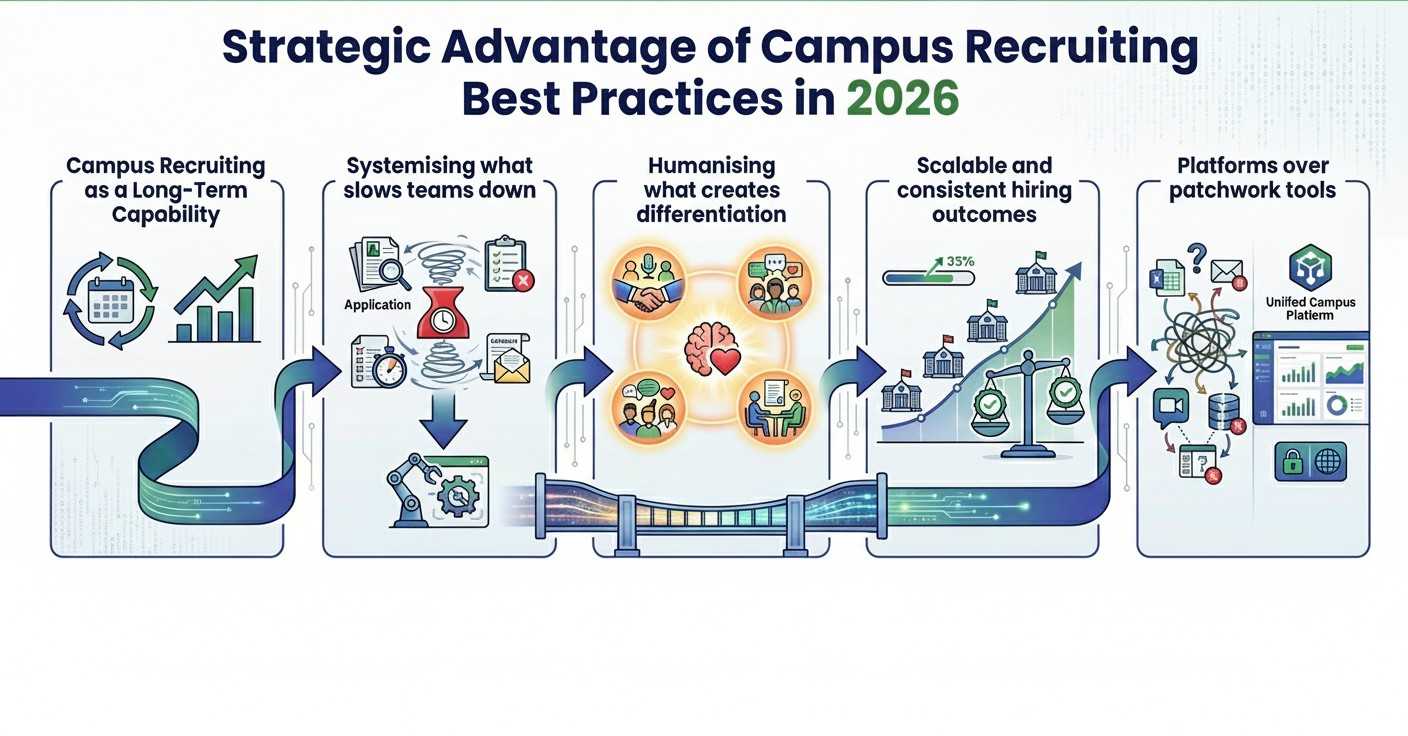
- Campus recruiting as a long-term capability: In 2026, campus recruiting is no longer a once-a-year activity. It has evolved into a continuous, strategic function that directly impacts workforce planning, talent quality, and future leadership pipelines.
- Systemising what slows teams down: Repetitive and high-volume tasks—such as application tracking, eligibility checks, assessments, and offer management—must be systemised to reduce delays, errors, and recruiter burnout across the campus recruitment process.
- Humanising what creates differentiation: Critical moments like interviews, candidate engagement, and post-offer conversations should remain human-driven, as trust, motivation, and cultural alignment cannot be automated.
- Scalable and consistent hiring outcomes: By applying campus recruiting best practices thoughtfully, HR leaders can scale hiring across campuses while maintaining consistent quality and fairness.
- Platforms over patchwork tools: Modernising campus hiring requires a unified platform designed for campus scale—not multiple disconnected tools—ensuring visibility, control, and long-term hiring success.
Conclusion
Campus recruiting best practices in 2026 are defined by balance—not between speed and quality, but between systems and people. Companies that treat the campus recruitment process as infrastructure, rather than an annual activity, gain resilience against hiring volatility, recruiter turnover, and scale challenges. By systemising the repetitive layers of the campus hiring process and protecting human judgment where it matters most, HR leaders can build a campus recruitment plan that delivers consistent outcomes year after year. Platforms like Superset make this balance achievable, turning campus hiring into a long-term competitive advantage.