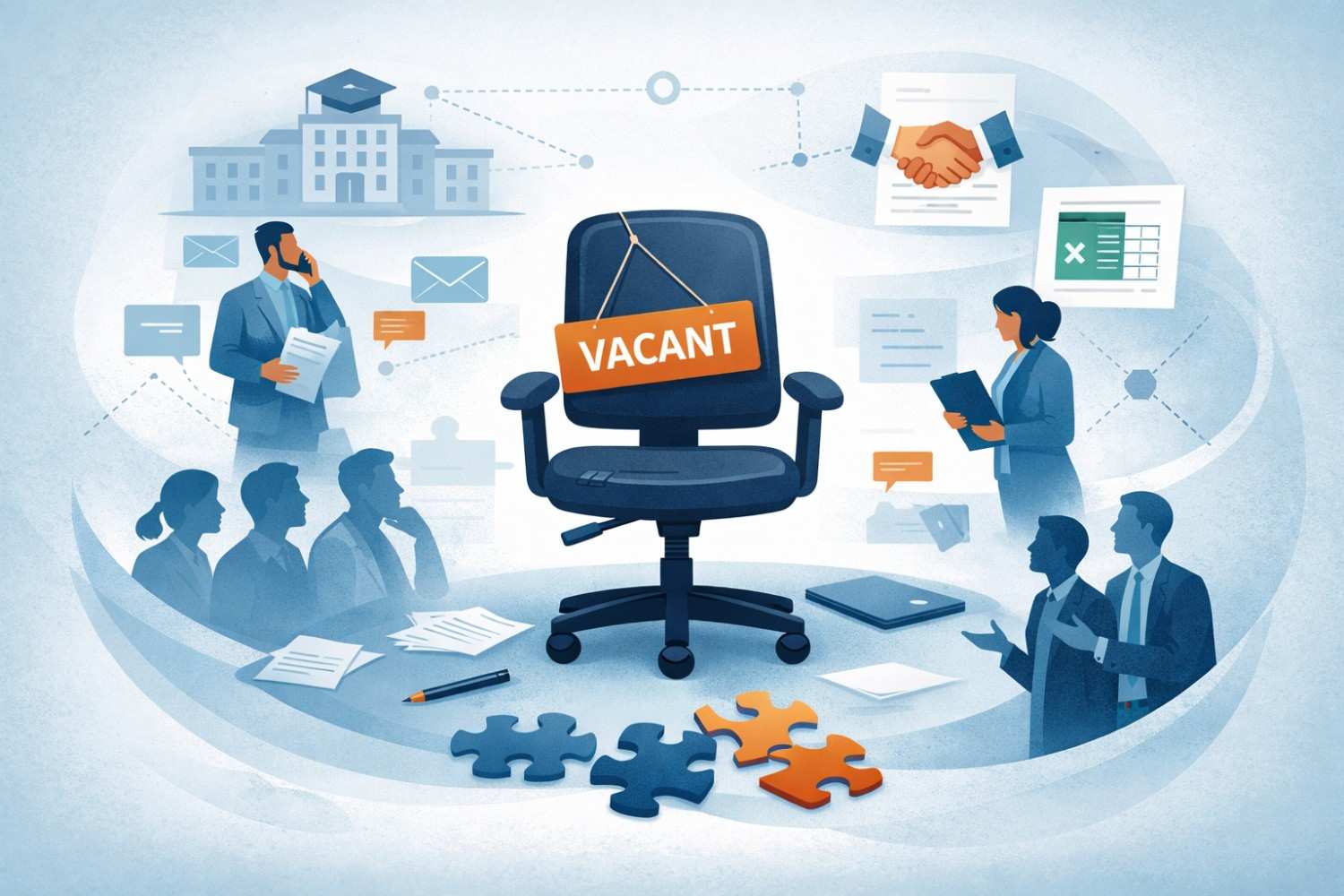



Placement portals have become central to how universities manage campus placements, but most institutions still treat them as tools rather than systems.
Ask any placement team where most of their time goes, and the answer is rarely strategic.
It is operational.
Managing student data. Tracking applications. Coordinating with companies. Following up on shortlists. Handling last-minute changes.
A placement portal is often introduced to solve these problems. But unless it is understood correctly, it ends up becoming just another layer added to an already complex process.
To understand the real value of a placement portal, we need to look beyond what it does.
What is a Placement Portal
A placement portal is a platform that helps universities manage campus placement activities in a structured way.
But reducing it to just a “platform” misses the point.
A placement portal is where the entire placement system runs.
It connects:
- Student profiles
- Company requirements
- application workflows
- shortlisting processes
- interview coordination
- offer tracking
Instead of managing each step separately, everything flows through a single system.
And that changes how placements are executed.
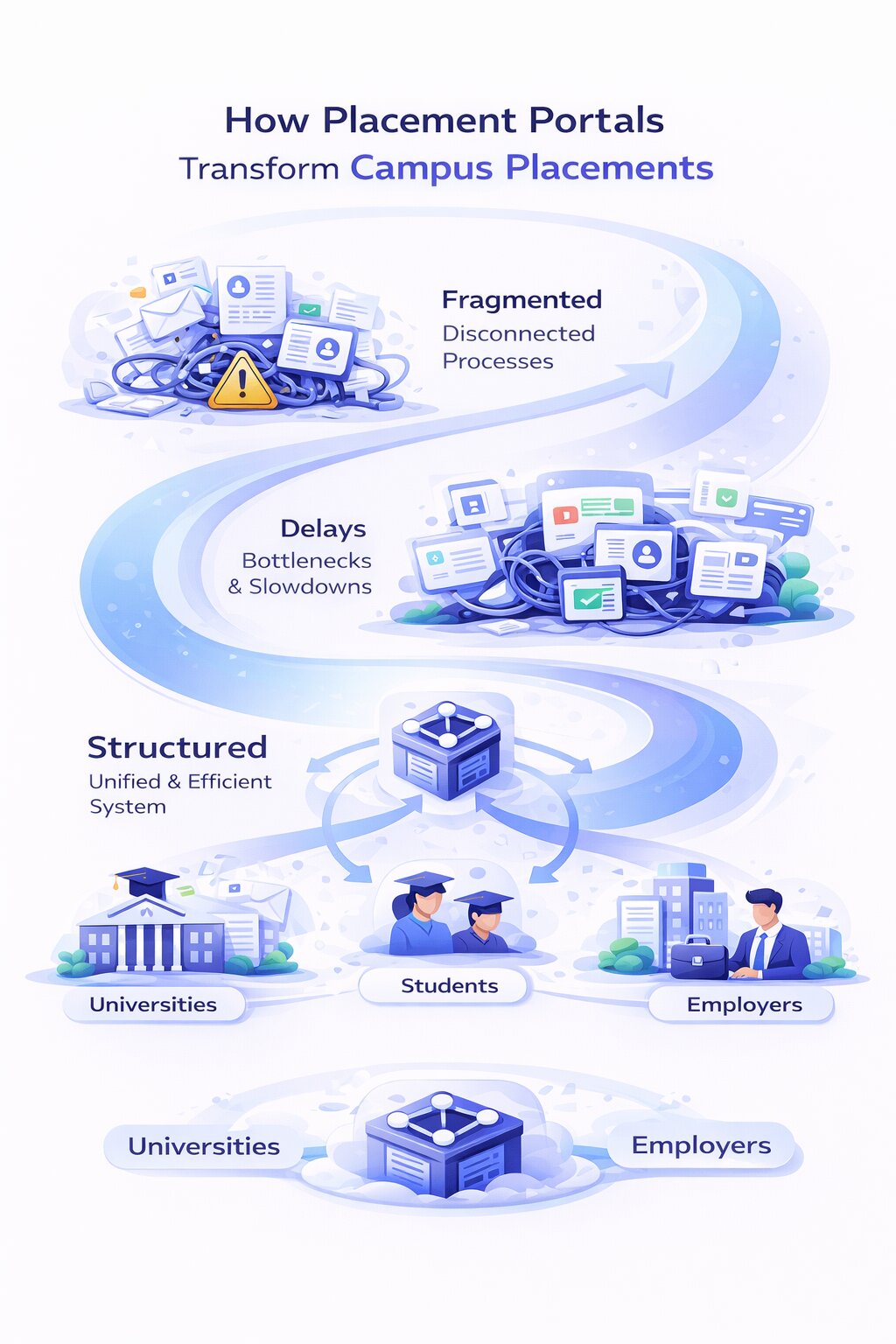
Why Traditional Placement Methods Stop Working
Before placement portals became common, universities relied on combinations of spreadsheets, emails, and forms.
At a small scale, this works.
As the number of students and companies increases, these methods start to break.
Data becomes inconsistent. Tracking becomes manual and error-prone. Communication becomes fragmented.
The issue is not that these tools are ineffective.
It is that they were never designed to work together.
A placement process built on disconnected tools will always struggle to scale.
The Real Role of a Placement Portal
Most people assume placement portals are meant to automate tasks.
Automation is only a part of the story.
The real role of a placement portal is to create structure.
A placement portal does not fix broken processes. It forces them to become visible.
When all stages of placement are connected:
- Gaps are easier to identify
- Delays become visible
- Decision-making becomes faster
This visibility is what transforms execution.
How Placement Portals Actually Work
Everything begins with structured student data.
Students create profiles with academic records, skills, and preferences. This becomes the foundation for all placement activity.
When a company is onboarded, its eligibility criteria are mapped against this data.
Applications happen within the system. Eligible students apply. Ineligible cases are filtered automatically.
Shortlisting happens within the same environment. Recruiters evaluate profiles while placement teams track progress.
Interview scheduling is coordinated through the platform. Students receive updates without relying on fragmented communication.
At any moment, the placement team has clarity on:
- How many students applied
- How many are shortlisted
- Which stages are delayed
This clarity is what changes the system from reactive to controlled.
What Placement Teams Actually Do Inside a Portal
The value of a placement portal becomes most visible during active placement cycles.
A placement team is not just observing data. They are running the entire workflow from one place.
A new company is added with specific eligibility criteria. The system instantly filters eligible students.
Students apply directly within the platform. There is no need for external forms or manual consolidation.
Recruiters review applications and shortlist candidates while placement teams monitor progress in real time.
Interview slots are scheduled within the system, eliminating long email threads.
At any point, the team knows exactly where things stand.
This level of visibility is what allows placements to scale without chaos.
Key Features That Actually Matter
Not every placement portal delivers meaningful value.
What matters is not the number of features, but how well they support a connected workflow.
Centralised student database
A single, consistent source of student information.
Structured application flow
Applications tied to eligibility and company requirements.
Automated shortlisting support
Reducing manual filtering effort.
Integrated interview scheduling
Coordinated within the system.
Real-time tracking
Visibility across all stages.
Built-in communication
Updates handled within the platform instead of external channels.
How to Choose the Right Placement Portal
Selecting a placement portal is not about choosing the one with the most features.
It is about choosing the one that fits how your placement process should run.
Some key factors to evaluate:
Workflow integration
Does it connect all stages or operate in silos?
Ease of adoption
Can students, recruiters, and placement teams use it without friction?
Scalability
Can it handle increasing volume and parallel drives?
Visibility
Does it provide real-time insights into placement progress?
Communication
Is communication part of the system or handled separately?
A portal that fails in these areas becomes another tool instead of the system.
Why Universities Struggle Even After Adopting Portals
Adopting a placement portal does not automatically solve placement challenges.
In many cases, the portal is introduced, but existing processes remain unchanged.
Teams continue using spreadsheets for tracking. Communication still happens outside the system.
The portal becomes an additional layer instead of the core system.
This leads to duplication of effort, not reduction.
The issue is not technology.
It is how the process is aligned to the technology.
How Platforms Like Superset Fit In
Platforms like Superset are designed to function as infrastructure, not just software.
They connect universities, students, and employers into a single ecosystem where the entire placement workflow runs.
When a company initiates a hiring drive, eligible students are automatically mapped based on predefined criteria.
Applications flow into a structured pipeline. Recruiters shortlist candidates within the system, while placement teams track progress in real time.
Interview coordination, communication, and tracking happen within the same environment.
There is no need to move data between tools or follow up manually for updates.
This is where placement portals move from being tools to becoming systems.
When Should Universities Move to a Placement Portal
The need becomes clear when:
- Student volumes increase significantly
- Multiple companies run parallel drives
- Manual tracking starts slowing down operations
- Communication gaps begin affecting outcomes
At this stage, continuing with fragmented systems leads to diminishing returns.
A structured platform becomes essential.
The Shift From Tools to Systems
The biggest shift in campus placements is not technological.
It is conceptual.
Moving from tools to systems.
Tools solve individual problems.
Systems solve how those problems interact.
Placement portals, when used correctly, are systems that enable scale, visibility, and control.
Frequently Asked Questions
How is a placement portal different from spreadsheets
It connects all stages of placement instead of managing them separately.
Why do universities need a placement portal
To manage scale, improve coordination, and reduce manual effort.
How do I choose the best placement portal
Focus on workflow integration, scalability, ease of use, and visibility.
Can a placement portal handle multiple companies at once
Yes, structured systems are designed to manage parallel placement drives efficiently.
What challenges do placement portals solve
Data fragmentation, communication gaps, and lack of visibility.
Is a placement portal useful for small colleges
Yes, especially as they begin scaling placements.
Can placement portals automate placements
They automate workflows but still require human decision-making.
What is the biggest mistake while adopting a portal
Using it alongside fragmented processes instead of making it the core system.
How does Superset help
Superset provides a unified platform that connects universities, students, and employers for structured placements.